

social media, Uncategorized

Australia’s Green Power Push: Subsidies Fuel Renewables, but at What Cost?

Renewables, but at What Cost?

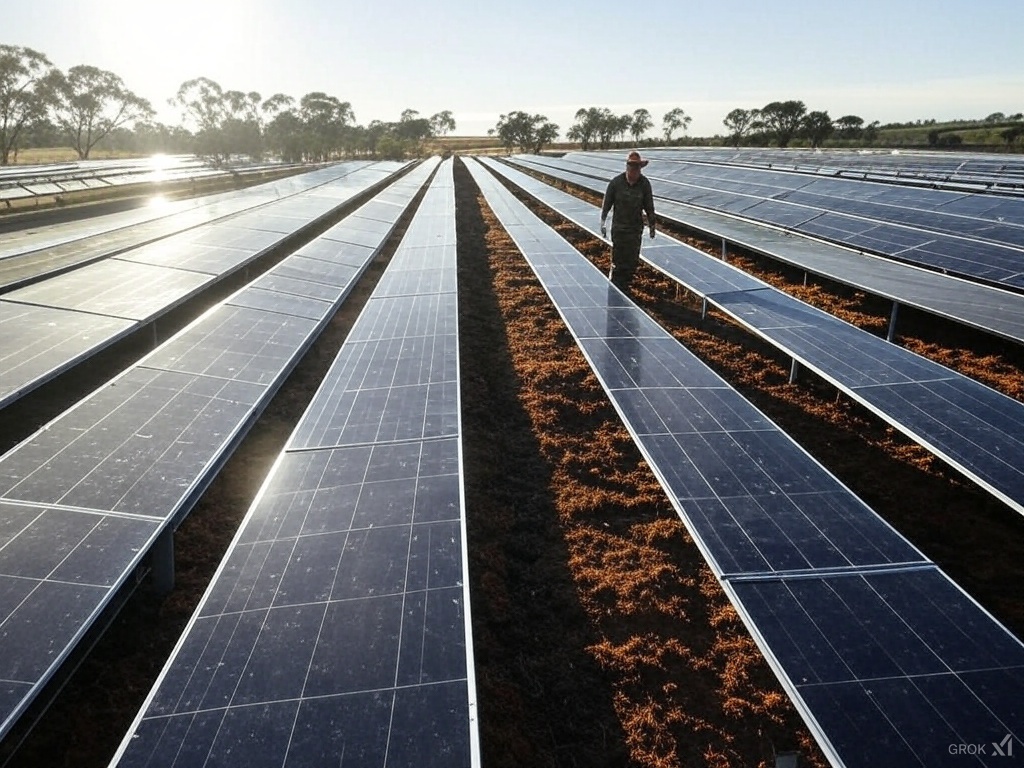
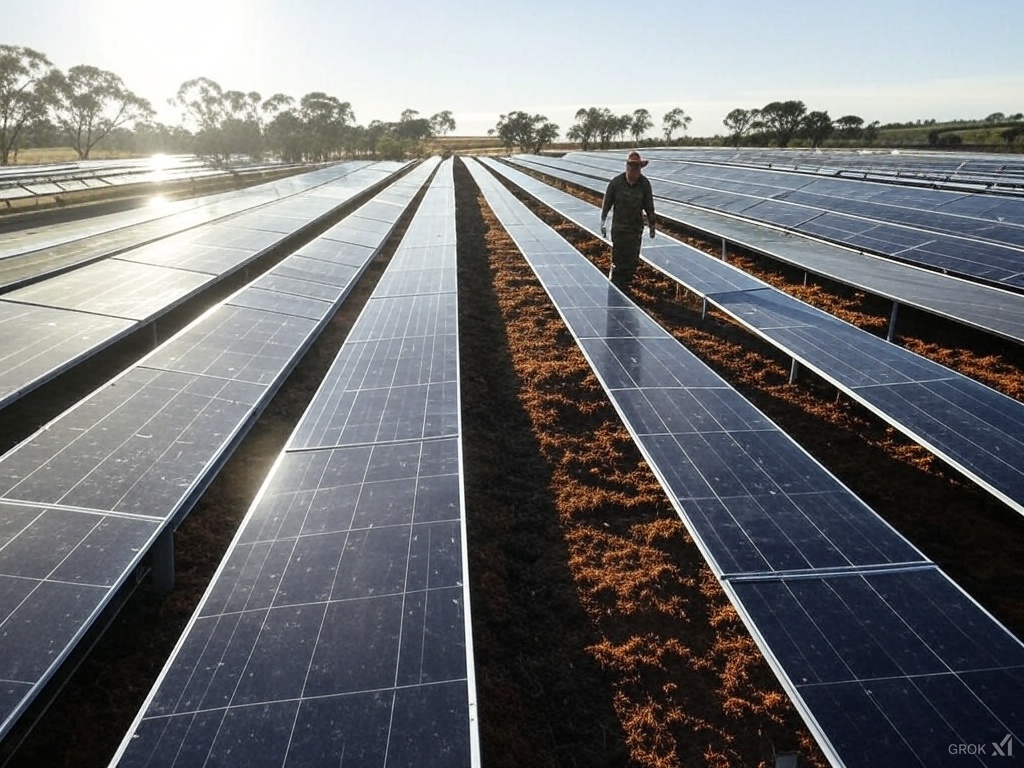
Australia’s march toward a renewable energy future is in full swing. Solar panels gleam on rooftops, wind turbines dot the horizon, and government subsidies have poured billions into this “green power” revolution. Yet, as households open their electricity bills, many are left wondering: why does cleaner energy seem to come with a higher price tag?

The answer lies in a complex mix of policy, infrastructure, and market dynamics. For over two decades, Australia has leaned on subsidies to kickstart renewables. The Renewable Energy Target (RET), launched in 2001, split into two streams: the Large-scale Renewable Energy Target (LRET), which bankrolls wind farms and solar plants, and the Small-scale Renewable Energy Scheme (SRES), putting solar within reach for homeowners. Producers earn certificates—LGCs and STCs—that electricity retailers must buy, passing the cost onto consumers. Add in billions from the Clean Energy Finance Corporation ($10 billion since 2013) and the Australian Renewable Energy Agency (over $1.5 billion), plus the 2022 Powering Australia plan’s $20 billion grid pledge, and you’ve got a hefty public investment.

State governments chip in too. Feed-in tariffs once paid households generously for solar power fed back to the grid—think 60 cents per kilowatt-hour in Queensland a decade ago, now closer to 5-10 cents. Rebates and interest-free loans still nudge people toward panels, though the golden days of subsidies are waning.

The promise? A cleaner grid and, eventually, cheaper power. Renewables like solar and wind have near-zero running costs, undercutting coal and gas in the wholesale market when the sun shines or breezes blow. In 2021, daytime prices in some states dipped below $50 per megawatt-hour thanks to solar, per OpenNEM data. But here’s the rub: those savings don’t always last past dusk.

Critics argue this green push is driving up bills—and they’ve got a point. The Australian Energy Market Commission (AEMC) pegged the RET’s cost at 4-5% of household bills in the mid-2010s, a burden that’s eased as targets were met but hasn’t vanished. Then there’s the grid itself. Connecting remote wind and solar farms means massive transmission projects—$2.3 billion for EnergyConnect, $3 billion-plus for HumeLink, and a $12.7 billion tab by 2030, says the Australian Energy Market Operator (AEMO). Network charges, which account for 40-50% of your bill, creep up to cover it.

The intermittency of renewables adds another layer. When solar fades or wind stalls, gas plants or batteries step in—costly stopgaps. Coal plant closures, like Hazelwood in 2017 and Liddell in 2023, have tightened supply during this transition, spiking wholesale prices. They hit $87 per megawatt-hour nationally in 2022-23, nearly double the $45 from 2015-16, per AEMC stats. The 2022 energy crisis, fueled by coal outages and global gas spikes, saw bills jump 6.4% in 2023, according to the Australian Competition and Consumer Commission (ACCC).

Yet, it’s not a simple green-versus-black story. Fossil fuels still get a hefty leg-up—$29 billion annually in tax breaks and unpriced externalities like pollution, per a 2021 IMF estimate. That’s a bigger subsidy pie than renewables see. Redirecting those funds could smooth the transition without stinging consumers as much.

So, where do prices stand? Electricity costs soared 60% from 2010 to 2020, per the Australian Bureau of Statistics, though a COVID-driven renewable glut cut them 8.2% in 2020-21. The ACCC forecasts a 3% drop in 2024-25 as more renewables hit the grid, but bills remain higher than a decade ago. For many, the long-term promise of cheaper, cleaner power feels distant when the quarterly bill lands.

Australia’s green power experiment is a global test case. Subsidies have slashed emissions—renewables hit 35% of electricity in 2023, up from 14% in 2010—and built an industry employing thousands. But the transition’s costs, from grid upgrades to backup systems, are real and immediate. Policymakers face a tough balancing act: scale renewables fast enough to stabilize prices, without leaving households in the lurch.

The debate rages on platforms like X, where energy analysts and everyday Aussies clash. Some hail renewables as the future; others decry “subsidy-driven price hikes.” The truth, as always, lies in the numbers—and the bills. For now, Australia’s green dream is a work in progress, powered by ambition but tempered by the reality of keeping the lights on.

social media

The Martian Legacy

The Martian Legacy: A Journey Through Time

Buy now at Amazon Store

Uncategorized

Critical Reflection 2

Driving Question: Is it sustainable that we continue on our current path of technological development?

The question of whether it is sustainable for us to continue our current path of technological development is difficult and complicated. In order to explore this question, I will use Gibbs’ Reflective Model, which consists of six stages: Description, Feelings, Evaluation, Analysis, Conclusion, and Action Plan, to better explain this in more details.

Description: Our current path of technological development is characterized by rapid advancements in fields such as artificial intelligence, biotechnology, and automation. These developments are transforming our society in many ways, from the way we work to the way we communicate and interact with each other.

Feelings: There are many emotions associated with the question of whether our current path of technological development is sustainable. On the one hand, there is excitement and optimism about the potential benefits that new technologies could bring, such as increased efficiency, improved health outcomes, and reduced environmental impact. On the other hand, there is also concern and anxiety about the potential negative consequences of these developments, such as the loss of jobs, increased inequality, and the loss of privacy.

Evaluation: In order to evaluate whether our current path of technological development is sustainable, we must consider both the positive and negative aspects of these developments. From one point of view, new technologies have the potential to address many of the challenges facing our society, such as climate change and public health. There are also risks associated with these developments, such as the potential for misuse or unintended consequences. One only must look to the Congo were mining cobalt for batteries has led to the exploitation of children used in illegal artisan mines.

Analysis: To fully understand the implications of our current path of technological development, we must consider a range of factors, including economic, social, and environmental impacts. For example, we must consider how these technologies will affect the job market, income inequality, and access to resources. We must also consider how they will affect the environment, including the use of resources and the generation of waste. Many new green technologies are very hard to dispose of so new industries need to be created to recycle these new products such as batteries.

Conclusion: Based on the analysis, our current path of technological development is not sustainable in its current form. While there are certainly benefits associated with these developments, there are also significant risks and challenges that must be addressed. In order to ensure that our technological advancements are sustainable, we must take a more holistic approach that considers the economic, social, and environmental impacts of these developments especially the inequity of poorer developing countries.

Action Plan: To address the challenges associated with our current path of technological development, we must act on multiple levels. At the individual level, we must educate ourselves about the potential risks and benefits of new technologies and take steps to ensure that we are using them responsibly. At the organizational level, we should encourage companies to adopt sustainable practices and consider the broader impacts of their technologies and using incentives to help foster some of these changes. Lastly, at the policy level from the governments level, we must develop regulations and policies that promote sustainable technological development and ensure that these developments are in line with broader societal goals, while also not placing to much burden on the population to the point of where things become too expensive and put more people into poverty.

Leave a comment

One-Time
Monthly
Yearly

Make a one-time donation

Make a monthly donation

Make a yearly donation

Choose an amount

¤5.00
¤15.00
¤100.00
¤5.00
¤15.00
¤100.00
¤5.00
¤15.00
¤100.00

Or enter a custom amount

¤

Your contribution is appreciated.

Your contribution is appreciated.

Your contribution is appreciated.

DonateDonate monthlyDonate yearly
Uncategorized

Critical Reflection 1

Driving Question: Is there an ethical code when engaging in the digital space, we can all agree on? What might this look like?

Introduction:

In the digital age, individuals and organizations are increasingly engaged in online activities that require ethical consideration. The digital space presents a unique set of challenges and opportunities, and ethical codes are necessary to ensure that people behave in a responsible and respectful manner towards each other.

Gibbs Reflective Model:

Using the Gibbs Reflective Model, we can explore ethical codes that could be agreed upon for engagement in the digital space.

Description: The digital space includes social media platforms, online forums, e-commerce websites, and other digital communication channels. In this space, individuals interact with each other, share information, and engage in transactions. However, there is a lack of a universally agreed-upon ethical code that guides behavior impart to the many different jurisdictions around the world.

Feelings: Without a universally agreed-upon ethical codes can lead to confusion, conflict, and harm within the digital space. People may feel violated or disrespected when they encounter behavior that they perceive as unethical or goes against morals. On the contrary, some individuals may feel that they have the right to behave in any manner they choose in the digital space.

Evaluation: An ethical code for engagement in the digital space should include guidelines for respecting the privacy, dignity, and autonomy of individuals. This includes not engaging in cyberbullying, cyberstalking, or other forms of online harassment. Additionally, ethical codes should require individuals to be truthful and transparent in their online communications, and to respect intellectual property rights.

Analysis: To develop a universally agreed-upon ethical code for the digital space, it is necessary to consider the perspectives and values of different stakeholders. This includes individuals, organizations, governments, and society. A code of ethics that respects human rights, promotes social justice, and fosters a culture of respect and responsibility in the digital space would be ideal but true laws that are effective are still a long way off for protecting all of us.

Conclusion: Is it that an ethical code for engagement in the digital space should prioritize the well-being and dignity of all individuals regardless of ethnicity or their culture? It should be flexible and adaptable to the changing nature of digital space i.e., the future of AR or VR and should be developed through dialogue and consultation with stakeholders from different sectors. It should require individuals to behave in a responsible and respectful manner towards each other, and to respect the privacy, autonomy, and intellectual property rights of others. Once implemented, the ethical code should be enforced through appropriate mechanisms to ensure that people behave in a responsible and respectful manner towards each other.

Action Plan: To implement an ethical code for the digital space, it is necessary to engage in dialogue and consultation with stakeholders from different sectors. This includes individuals, organizations, governments, and civil society groups. Once an ethical code has been developed, it should be disseminated widely and enforced through appropriate mechanisms, such as social norms, legal frameworks, and technological solutions.

Leave a comment

One-Time
Monthly
Yearly

Make a one-time donation

Make a monthly donation

Make a yearly donation

Choose an amount

¤5.00
¤15.00
¤100.00
¤5.00
¤15.00
¤100.00
¤5.00
¤15.00
¤100.00

Or enter a custom amount

¤

Your contribution is appreciated.

Your contribution is appreciated.

Your contribution is appreciated.

DonateDonate monthlyDonate yearly